Government of Uganda seems to soften position on clearing Mabira rainforest
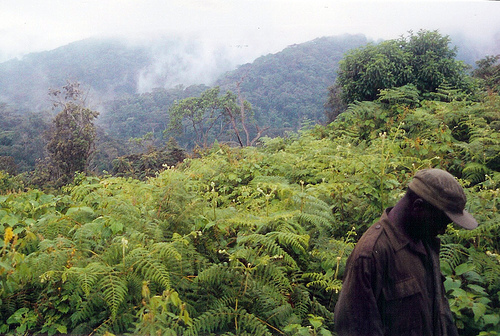
Last week, President Museveni announced that the government will not necessarily stick to its plan to clear one third of Mabira rainforest for the cultivation of sugar cane. The president said that his government is open to alternative ways to increase Uganda's sugar production. Before, Museveni had said that his decision was final, but pressured by national and international environmental activists (including Member of Parliament Beatrice Anywar) he agreed to consider other options.
For years, Both ENDS has been working with Ugandan organisation NAPE , one of the organisers of the 'Save Mabira Crusade'. A confrontation between Frank Muramuzi, director of NAPE, and the Ugandan government seemed inevitable, but eventually the president felt compelled to give in.
In the original plan more than 7,000 acres of rainforest, an area the size of a large city, would be used for sugar cane cultivation. The deforestation not only would have significant negative consequences for the forest in the area but would also increase desertification in a much larger area, according to the activists of Save Mabira Crusade. The Buganda kingdom, which covers the southwest of Uganda, has also protested against the giveaway of land that traditionally belongs to the kingdom.
"Several small rivers that flowed from Mabira to Lake Victoria, have already dried up", the Save Mabira Crusade states. "With the disappearance of the forest more rivers will empty and Lake Victoria will disappear, just like Lake Chad which almost dried out." The disappearance of rainforests and rivers not only has disastrous consequences for flora and fauna in the area; also local communities, whose existence depends on the forest and its waterways, will have to seek refuge elsewhere.
In their online petition the Save Mabira Crusade points out that the former Ugandan government already wanted to sell a large part of the Mabira forest to the Sugar Corporation of Uganda Ltd. (Scoul). That decision was reversed in 2007, after weeks of demonstrations and riots which even caused the death of some activists. Some protest leaders were arrested and only released after three years. Fortunately the demonstrations proved not to be in vain: Mabira forest was provisionally saved.
According to the activists the huge sugar cane plantations do not yield nearly as much as is claimed: the soil will be exhausted and useless within a few years. In 1997, 2001 and 2002 several thousands of acres of rainforest in Uganda have been sold to foreign investors. "All those sugar cane fields are now empty or hardly produce anything; we do not want the same thing to happen in Mabira forest."
Both ENDS will continue to support NAPE in its protest against the clearing of Mabira forest. For more information about this topic: "Ugandan Public Prosecutor withdraws indictment against protesters "(January 17, 2011).
Photo: YoTuT
Read more about this subject
-
 Dossier /
Global Alliance for Green and Gender Action (GAGGA)
GAGGA rallies the collective power of the women's rights and environmental justice movements to realize a world where women can and do access their rights to water, food security, and a clean, healthy and safe environment.
-
 News / 6 November 2026
Both ENDS and partners head to COP31 in Antalya, Türkiye
On Monday 9 November, world leaders, negotiators and civil society meet in Antalya, Türkiye for COP31, the UN climate conference that runs until 20 November. Both ENDS and our partners will be there, pushing for two things: climate finance that actually reaches women-led and community-based organisations, and an end to economic rules that block the move away from fossil fuels.
-
 Dossier /
Green Climate Fund: calling for local access to climate finance
Local organisations and groups must be given access to climate finance from the Green Climate Fund. They know exactly what is happening in their local context and what is required for climate adaptation.
-
 Blog / 6 November 2026
As the Green Climate Fund turns its hopes to the private sector, it must not forget the communities most in need
By Daan RobbenOver the past few months, I made two trips that capture both the work we do at Both ENDS and what is at stake in today’s debate on climate finance. While large international funds are struggling to deliver on locally led climate action, initiatives Both ENDS is part of, such as the PaPes programme in Senegal and the GAGGA alliance, are showing how it can be done. With the evidence of the funding mechanisms that work, we advocate at international spaces for change.
-
 Dossier /
Finance for agroecology
The lion's share of public budgets for climate, agriculture and development still goes to conventional agroindustrial projects that contribute to the current climate, food and biodiversity crises. Both ENDS and our partners are calling for a transition to agroecological practices that are people- and environment-friendly.
-
 Environmentally Just Practice /
Agroecology
Agroecology is a diverse set of agricultural practices, a field of science and a social movement. It aims to transform food systems towards greater ecological sustainability, social justice, and resilience. Both ENDS and CSO-partners around the world support farmers and pastoralists practising agroecology, both on the ground and in gathering political and financial support.
-
Publication / 6 November 2026
-
Letter / 3 November 2026
Objection to the proposed FMO financing of Eni Natural Energies Congo SAU
Together with JA! Justica Ambiental and ReCommon Italy, Both ENDS wrote a letter to FMO’s investment team urging them to reject a financing of up to USD 150 million in the IFC-led facility for Eni Natural Energies S.p.A. and its subsidiaries in Angola, the Republic of the Congo and Mozambique.
-
 News / 2 November 2026
Our call to FMO: Put people and climate before Eni’s profits
The Dutch development bank FMO is considering a loan to help Eni natural Energies Congo1 to grow its biofuel business in Africa. Together with our partners, we have asked FMO not to go ahead, for three reasons: Eni is a highly profitable oil and gas company that does not need public development, its biofuel projects in Africa have harmed farmers and put pressure on food supplies, and it uses lawsuits to intimidate its critics.
-
 News / 27 October 2026
Both ENDS at COP31: Locally led climate finance and ending investment rules that block climate action
At COP31, Both ENDS advocates for climate finance that reaches women-led and community-based organisations at the forefront of climate action, while challenging the economic rules that obstruct the transition away from fossil fuels. Together with partners in the Global Alliance for Green and Gender Action (GAGGA) and the PAPeS programme, we push for locally led adaptation, gender-just climate action and greater accountability for governments and companies.
We asked our colleagues Daan Robben and Fernando Hernandez why they are going to COP31, what messages they want to bring to negotiators, and what a positive outcome would look like.
-
 News / 25 October 2026
Meet Sarah Adongo: “The soil remembers those who cry and defend it”
By Sarah Adongo, Lawyer, Witness Radio, Uganda
Sarah Adongo is one of the three winners of the 2026 Irene Dankelman Young Ecofeminist Award, presented on 21 October at the UN Biodiversity Conference (CBD COP17) in Yerevan, Armenia. A lawyer working with Witness Radio Uganda, Sarah works with women affected by gender-based violence and communities affected by land dispossession and large-scale investments. In this piece, she shares what the award means to her and why gender and environmental justice must go hand in hand.
-
 Dossier /
The JWH Initiative: supporting young environmental leaders
The JWH Initiative aims to stimulate leadership of young people in environmental organisations by giving small grants to individuals to expand their knowledge, experience and training.
-
 News / 25 October 2026
Meet Yemi Knight: “Your experience is expertise”
By Yemi Knight (they/them), Founder and Executive Director, AnchorBridge Environmental Inc., Barbados
Yemi Knight is one of the three winners of the 2026 Irene Dankelman Young Ecofeminist Award, presented on 21 October at the UN Biodiversity Conference (CBD COP17) in Yerevan, Armenia. Yemi founded AnchorBridge Environmental, a youth-led organisation that combines policy advocacy with climate education across the Caribbean. We asked them what the award means to them, what they are working on, and what they would tell other young ecofeminist leaders.
Yemi is also part of the network of the Joke Waller-Hunter Initiative, powered by Both ENDS. With a JWH grant, Yemi followed courses in Social, Environmental and Economic Impact Assessment and in Risk, Crisis and Disaster Management at the University of the West Indies, Cave Hill Campusc, as well as a Level 1A Spanish course at the Centre for Language Learning at the university’s St. Augustine Campus.
-
 Dossier /
Trade agreements
International trade agreements often have far-reaching consequences not only for the economy of a country, but also for people and the environment. It is primarily the most vulnerable groups who suffer most from these agreements.
-
 Dossier /
International trade and investment with respect for people and planet
The network of international trade and investment treaties is large and complex. The Netherlands alone has signed more than 70 bilateral investment treaties (BITs) and is party to the trade and investment agreements concluded by the EU, like the EU-Mercosur and EU-Indonesia trade deals.
-
 Dossier /
Rights for People, Rules for Corporations – Stop ISDS!
Indigenous communities in Paraguay saw their attempts to regain their ancestral lands thwarted by German investors. In Indonesia, US-based mining companies succeeded to roll back new laws that were meant to boost the country’s economic development and protect its forests. This is the level of impact that investment treaties can have on social, environmental and economic development and rights. Why? Because of the ‘Investor-to-State Dispute Settlement’ clauses that are included in many such treaties.
-
 News / 15 October 2026
ISDS infringement complaint filed with the European Commission
The Netherlands and Portugal join four other EU countries facing such a complaint.
-
 Press release / 15 October 2026
Dutch and Portuguese organisations file EU complaint over investment treaties that let companies and sanctioned Russian oligarchs sue EU countries for compensation
The Netherlands and Portugal join four other EU countries facing such a complaint, as the Global Days of Action against Investor-State Dispute Settlement (ISDS) begin.
-
 Dossier /
Dare to Trust: the power of unconditional funding
At Both ENDS we cherish our long-term relationships with partners in our global network. These relationships are based on equality and built on trust. The trust we have in each other has developed from years of strategic cooperation, including joint advocacy around common agendas, knowledge sharing, networking, and mobilising and sharing resources to advance environmental justice.
-
 News / 5 October 2026
Rural Women's Assembly wins Right Livelihood Award
We are thrilled to share that our partner the Rural Women's Assembly (RWA) is one of this year's Right Livelihood Laureates! The award, often called the "Alternative Nobel Prize", honours RWA for bringing together more than 178,000 women farmers in eleven Southern African countries. Together, these women stand up for their land, their seeds and their right to make decisions about their own lives and bodies.